Swedish Bhairavi Says: “Ritual or Performance?”
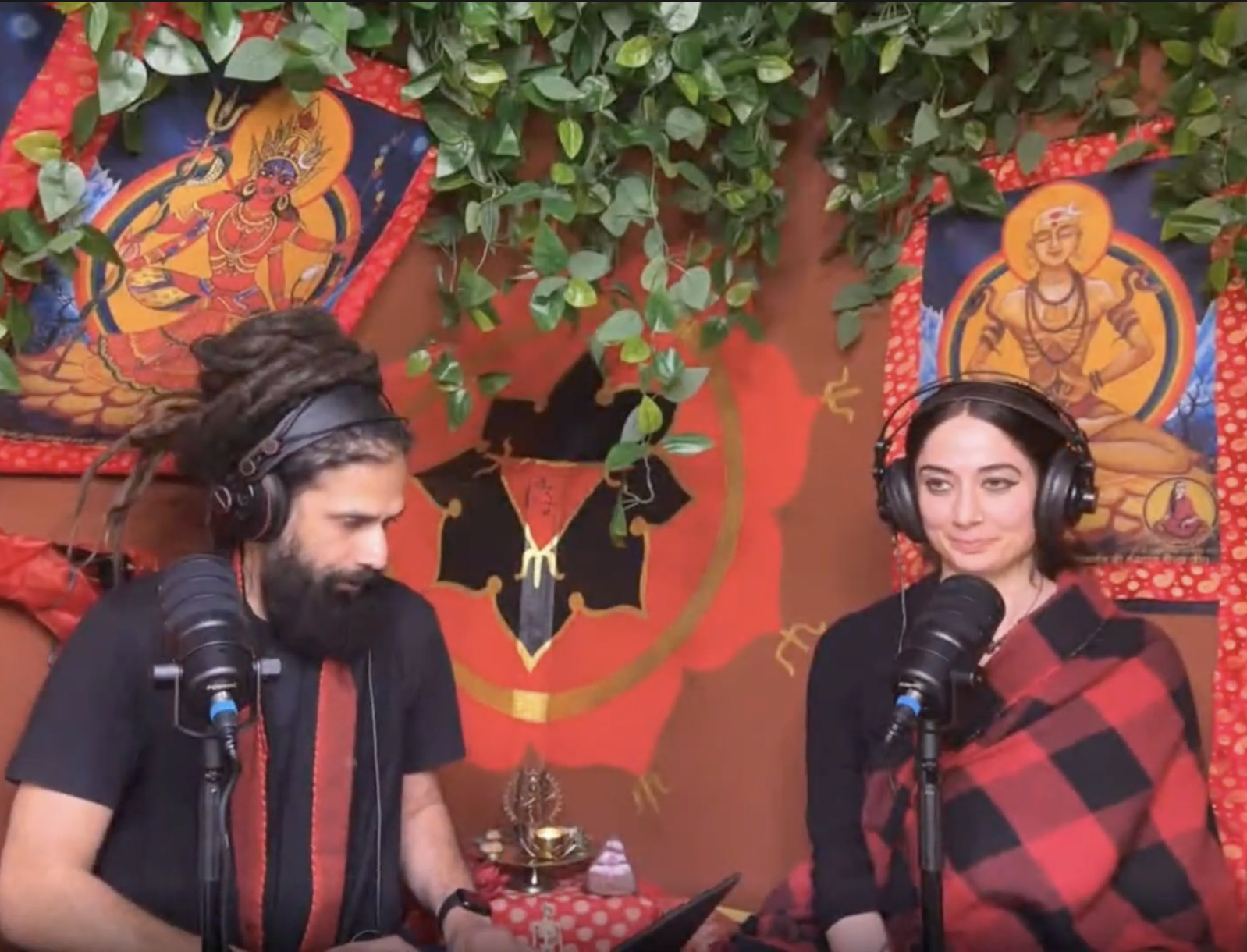
Echoes of your voices, vibrations, heart, intent, attempt and presence keeps resounding in our hearts. Our meetings are greater than great and you are so precious. Sparkling stars in your own ways..
Remember the Dakini essence… the one that says that no matter the situation, there is insight and learnings and wisdoms to be gained. That the result of whatever you are doing need not be perfect to have learnt something from it. That the people you engage with don’t have to be your favorite people for you to be able to gain insights from the engagements. That no matter if you are in resonance or in dissonance with something, a Siddha Tantra practitioner will with the grace of Dakini essence, always find a way to gain insight and wisdom.
During the Mantra Ritual Offerings this week, you were given a particular structure.
There were instructions. A progression. Particular mantras, particular numbers, particular gestures, pauses, a beginning and an ending. Certain things were specified very precisely. Other things were left for you to meet in the moment.
This gives us something interesting to contemplate. When does a ritual become Yoga? Because knowing the structure alone does something very different. A person can remember every word. Every mantra can come at the correct moment. The number can be exact. The hands can move correctly. The sequence can unfold beautifully.
And still, another question remains. Where is the practitioner? This is one of the things that begins to matter more and more as practice develops.
A ritual has form. Structure has value. Precision has value. Craft has value. When something has been given in a particular way, following that form carefully can itself become an expression of love, attention and offering.
Yet Yoga asks for something more intimate. It asks for you. Your presence, your awareness, your capacity to carry what is happening. Your body, breath, voice, feeling, attention, bhava, the sound, the movement, the instruction, the room, the people present... The whole constellation. The whole full being.
This is where ritual becomes something other than a sequence of actions.
And one might ask then… Who can follow a structure while remaining completely alive inside it? Who can receive an instruction and carry it into the present moment? Who can become a vessel and engine of Shakti through which the ritual actually moves and takes form? A bit like who can build a vehicle following specific gps coordinates... And who simply becomes an echo of something previously learned, replaying the words and movements from memory?
There is a great difference, when everything is new. Sometimes the challenge comes from unfamiliarity. You receive a long set of instructions. There are mantras you have barely spoken before. Perhaps there is a gesture to remember, a count to keep, an object to handle, a progression to follow. You may even have to read while performing the ritual.
Here, if one lets it, the mind has plenty to occupy itself with. Where am I in the sequence? What comes next? Was that the correct count? How do I hold this? How am I sounding? How am I appearing? This situation can easily awaken self-consciousness, insecurity and the urge to perform correctly, no matter if you are doing it alone, in front of another person or in front of yout teacher/Guides/Guru/Bhairav.
This is in many ways excellent material for practice. Because now you have an opportunity to learn how to carry uncertainty while remaining present, you will see what things are internalized and “yours” and what things are surface level maintained things.
You learn how to read an instruction and still feel. How to remember a count and still listen. How to make a mistake and carry yourself into the next moment. How to have a teacher sitting in front of you and remain with the space and constellation all becoming the offering. How to allow precision and bhava to live together. How to let the mind remain vibrant and alert while the whole being participates. The unfamiliar situation stretches the practitioner. It exposes things.
It gives places for Yoga to happen.
Then on the somewhat contrary, when everything is familiar…One might think that it should be easier?
But then another obstacle arrives. Familiarity. Perhaps you know the mantra completely. The sequence lives in your body. You have performed the ritual hundreds of times. There is little effort involved in remembering what comes next.
This can many time make entering the Yoga much easier. But familiarity carries another test. The present moment can begin to feel ordinary. The hand knows where to move. The mouth knows which syllable comes next. The count moves almost by itself. The ritual becomes familiar enough that the mind begins travelling elsewhere. What once demanded your whole attention can gradually become background. The sound continues. The movements continue. But the person, especially a beginner becomes increasingly faint inside them. This is why repetition itself requires maturity.
A seasoned Siddha Tantra practitioner can meet something for the thousandth time and still meet this occurrence of it. This breath has not happened before. This specific pronunciation has not happened before. This particular constellation of body, mind, sound, place, weather, circumstance, feeling and awareness has not happened before. The ritual may carry an ancient form. The meeting is happening now in this place, time and circumstance.
The practitioner is the key…and this is one of the deeper differences that begins to emerge between someone who has accumulated practices and someone who is gradually becoming a practitioner.
A seasoned Siddha Tantra practitioner can be “placed” in many kinds of situations. One day there may be an unfamiliar ritual, pages of instructions, mantras never uttered before, unfamiliar people and an unfamiliar environment. Another day there may be a practice that has been performed a thousand times before. Another day, the outside look of the engagements can be very so called “mundane”, ordinary, practical, “menial”.. Like shopping for household items, or scrubbing of a cooking utensil. And another day it may be a so called “very special event” or there may be an encounter or creation experience with a great being. And another day there might be no specific engagement at all, still, silent, existence. The outer constellation can change completely.
But the key….the conscious spiritual vessel is present through all. The practitioner is an engine or machine of Yoga and carries this into the constellation.
Structure may change, complexity may change, existence (and in many times complete and utter non-existance of preparation) may change. The place may change, the people may change, resources may change...
But…. the Siddha Tantra practitioner's relationship with presence and their adeptness and craft becomes increasingly stable.
This does not mean that every experience feels identical… it is quite the opposite. The capacity to be present allows the particular nature of each experience to become clear, more deep, vivid, vast and come in multitudes…
The practitioner becomes capable of dwelling in more. The sound, the bhava, the form, the craft, the refinements, the intent, the ambitions, the goals, the awkwardness, the beauty, the instruction, the unexpected, the place, the time, the circumstance.
Grace…
Effort…
Ultimately…….as “simple” as life, existence…. You know that simple task of actually being alive..and living to the fullest. All of live can begin to exist at once, alive. This is part of what we mean by Yoga. A gathering rather than a fragmentation. A clarity of being inside what is actually happening. A clarity of existence.
This also begins to change how one thinks about collecting practices. A thousand accumulated practices can still leave the practitioner moving on the surface. We have seen it a lot…many people. They are interested and want to learn, want to develop, hungry to practice and think that reading thousand books or getting access to a thousand advanced practices will give them that key. A lot of it is because the practice they encountered didn’t give them that completion, they didn’t find yoga or long lasting yoga in it.
There is a beautiful territory somewhere between new and familiar...
Practitioners beginning spiritual journeys need things they “know”. Known practices allow the uncertainty of the mind and confusions to settle and can give a door into Yoga. Less attention is spent remembering the mechanics, leaving greater space for listening, feeling, refining and entering.
But at the same time, especially in this day and age of information overload and boredom-impatience-fast-food-extraction-de-lux-tendencies that has become the new “natural”, there is a need of encounters with the unfamiliar. New practices, new settings, new ritual forms and new circumstances wake us up. They expose habits, they reveal insecurities, they ask for adaptability, they expand the range of experiences through which wisdom can become internalized.
And to mention…that of course new things are not only for impatient practitioners…it is also to actually increase beauty, arts, auspicious creation, craft, seva….expressions of Shakti and the beauty of life. The various flowers in the garden.
Developing depth. And developing range. Both are needed for the Siddha Tantra practitioner.
There may therefore be value in allowing practice to contain a living rhythm between the familiar and the unfamiliar. Return, deepen, vary, meet something new, return again. Discover that the familiar has changed because you have changed.
So what are we doing? No matter if ultra simple or extremely elaborate, are we doing a Ritual offering or a Performance?
This is why Bhairav ji has mentioned before that perhaps the difference finally lies less in what someone is doing and more in how fully they are there while doing it. Two people may perform the same sequence. Can even be the same mantra. The same number of repetitions. The same gestures.
From the outside they may appear almost identical. But inside, two completely different things may be happening. One may be trying to reproduce something successfully. The other may be carrying the whole event. And even within one practitioner, these can alternate from moment to moment and that itself can become something to observe.
Where does the offering suddenly become performance? Where does concern about appearance enter? Where does memory replace listening? Where does familiarity become dullness? Where does uncertainty wake you up? Where does structure support you? Where does precision become devotion? Where does the sound suddenly become alive again?
These are valuable things to notice… And here I cannot avoid mentioning that the Grace of Guru/Bhairav/guide/teacher is what is the light in the darkness…. How to explain this without people thinking that they have to follow something blindly…?
Slowly, through many different encounters, something matures. The practitioner becomes increasingly capable of being given a form and entering/creating/sensing Yoga. A simple form. A complicated form. A new form. An ancient or familiar form.
The structure remains important, and you should take the structure from the teacher/Guru/Bhairav/Guide. In Siddha Tantra that is the best possible and potent structure available in the present moment.
Then the craft becomes finer. The awareness becomes wider. The bhava becomes deeper. And increasingly, wherever the practitioner sits, no matter the place, time or circumstance, the possibility of Yoga sits there too.
May the Grace and Heart of Dakini and Siddhas permiate your whole being,
Swedish Bhairavi